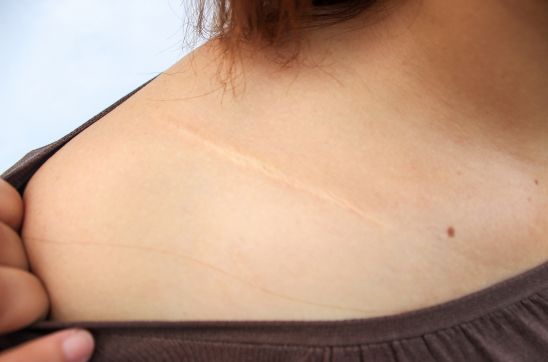
Shoulders do a lot of work every day, from carrying bags to stretching during workouts, so the skin here heals under constant movement. When a spot, cut, burn, or procedure disrupts the surface, the body repairs the area with new collagen. That process is natural, yet it can leave a raised, slightly depressed, darker, or shinier scar on the shoulder.
Some marks also feel tight or itchy early on, especially when clothing rubs the area. The good news is that most shoulder scars respond well to consistent care and realistic timelines. Let’s learn what shoulder scars are, how to spot the common types, and how Mederma can support daily scar care as the skin remodels over time.
What are Shoulder Scars?
A shoulder scar is the skin’s natural repair mark after inflammation, injury, or a procedure disrupts normal tissue. When the skin barrier is damaged, the body produces collagen fibres to repair the barrier and restore strength.
This collagen can organise unevenly, leaving a mark that looks raised, indented, darker, or slightly shiny. A shoulder scar may also feel tight, itchy, or sensitive, especially during early healing. As shoulders constantly move, the scar line can widen if tension is high. Your age, genetics, skin tone, and aftercare habits also influence how visible a shoulder scar becomes.
Types of Shoulder Scars
Not every shoulder scar behaves the same, so results improve when you match care to the correct scar category.
Atrophic Scars (Indented Scars)
These are depressions caused by collagen loss following inflammation, commonly associated with breakouts and follicle damage.
Hypertrophic Scars (Raised but Contained)
This type of shoulder scar rises above the skin but remains within the original injury border, often after cuts or surgery.
Post-Inflammatory Hyperpigmentation and Redness
Some marks are not permanent scars but lingering pigment or redness after irritation, friction, or acne activity.
Contracture-related Scarring
After burns or deeper injury, scar tissue can shorten and pull the skin, limiting comfortable movement in some cases.
Shoulder Scars: How to Remove or Reduce Them?
If you are figuring out how to get rid of shoulder acne scars, the best results usually come from consistent home care. Targeted clinical options, such as a scar gel, can then be added based on your scar type and age.
Targeted Topical Support with Scar Gel
If you want a simple once-daily option, Mederma Advanced Plus Scar Gel uses a triple-action formula with Cepalin® Botanical Extract and Allantoin to help soften texture and improve the look of old and new scars. Start once new skin has formed, at least 2 weeks after injury.
Apply a light layer of the scar gel once daily, then massage it in until it is fully absorbed. Use it for 8 weeks on new scars and 3–6 months on older scars, reducing the amount if dryness occurs. Patch test for 24–48 hours. Avoid the eye area. Stop if irritation occurs. Do not use it on deep wounds, animal bites, or severe burns.
Daily Sun Protection to Prevent Darkening
Ultraviolet exposure can darken healing marks and keep colour uneven for longer, especially on frequently exposed shoulders. Use broad-spectrum SPF on the area daily, then reapply if you are outdoors or sweating. This one habit often makes a shoulder scar look calmer and more even within weeks.
Silicone Support and Texture Care
Silicone sheets or silicone-based products can help flatten and soften raised scars over time. They work best when used consistently on fully healed skin, particularly for hypertrophic changes. If your skin feels irritated, reduce use and focus on gentle moisturising until comfort returns.
Acne-related Shoulder Scarring Support
If you have acne scars on the back and shoulders, focus on controlling active breakouts first, then treat marks second. Gentle exfoliation, non-comedogenic body care, and avoiding picking are key to preventing new scars. For bigger textural changes, dermatology-led plans may include chemical peels or microneedling, depending on sensitivity and skin tone.
In-clinic Options for Faster Change
For raised scars, steroid injections or laser therapy can reduce thickness and itch over several sessions. For indented scars, microneedling, subcision, or fractional laser can gradually stimulate collagen remodelling.
If you want to remove acne scars on the shoulders, a dermatologist can assess the depth and recommend the safest plan for your skin type. These options can be costly and may not suit everyone, so consult a dermatologist before proceeding with any procedure.
Prevention Tips for Shoulder Scars
Scar prevention starts at the moment the skin is irritated, not after a mark has already matured.
Treat Inflammation Early
Address acne, folliculitis, and irritation quickly to reduce collagen disruption and pigment changes.
Avoid Friction and Repeated Trauma
Tight straps, rough fabrics, and frequent scratching can keep inflammation active and worsen the visibility of scars.
Keep Wounds Clean and Lightly Moisturised
Gentle cleansing and a protective moisturiser support barrier repair and reduce excess scab pulling.
Do Not Pick, Squeeze, or Peel
Picking increases inflammation and depth, making each shoulder scar harder to fade evenly.
Support Healing with Sun Protection
Daily SPF on exposed shoulders reduces lingering discolouration and supports a more even finish.
Are Left Shoulder Scars Treated Differently?
A scar on the left shoulder is treated the same way as other sites, because care depends on scar type and skin sensitivity. It is not automatically harder to treat, but lifestyle patterns can affect healing outcomes.
If you carry bags on one side, sleep on that shoulder, or wear tight straps there, friction can keep the area irritated. Movement patterns can also influence tension across healing skin, affecting scar width and comfort.
The treatment approach stays the same, but reducing repeated rubbing often improves results. If your shoulder scar is raised, painful, or growing beyond the original border, seek a clinical review sooner rather than later.
Start Your Scar-fading Routine with Consistent Daily Care
A shoulder scar can improve with patience, consistent care, and a routine matched to its type and age. Start with sun protection, gentle moisturising, and reduced friction from straps or rough fabrics. Once the skin has fully healed, add a targeted topical step you can maintain daily.
Mederma Advanced Plus Scar Gel can be that consistent daily step. Its triple-action formula with Cepalin® Botanical Extract and Allantoin supports collagen activity, locks in moisture, and encourages cell renewal to help smooth and soften the scar.
Apply a thin layer, massage until absorbed, and follow the recommended schedule, adjusting the amount if dryness appears. Track progress with photos every two weeks to notice gradual changes in texture and tone. Start today, stay consistent, and let Mederma support your progress with care you can trust.
Scar tissue around the shoulder joint can contribute to stiffness by limiting the glide between tissues during movement. If pain, weakness, clicking, or reduced range lasts beyond a few weeks, a clinician can assess the cause. Based on your symptoms, they may recommend physiotherapy, imaging, or other targeted care.
Some scar tissue softens naturally as collagen remodels, but visible changes can take months and vary from person to person. Consistent moisturising and daily sun protection support healthier healing. For added care, Mederma Advanced Plus Scar Gel can be used on healed skin to improve texture and colour over time.
Shoulders face more friction from straps and clothing, and they often get less daily sun protection and moisturising. Breakouts on the back and shoulders can be deeper and more inflamed than facial acne. That combination can slow healing, increase pigment changes, and make marks look more noticeable.
Physiotherapy, stretching, and guided strengthening can improve mobility by gradually restoring tissue flexibility and shoulder mechanics. A clinician may recommend massage techniques or supervised mobilisation, especially after injury or surgery, for safe progress. Once the skin is fully healed, Mederma Advanced Plus Scar Gel can support daily scar care.
 mederma@winmedicare.com
 Login
Login